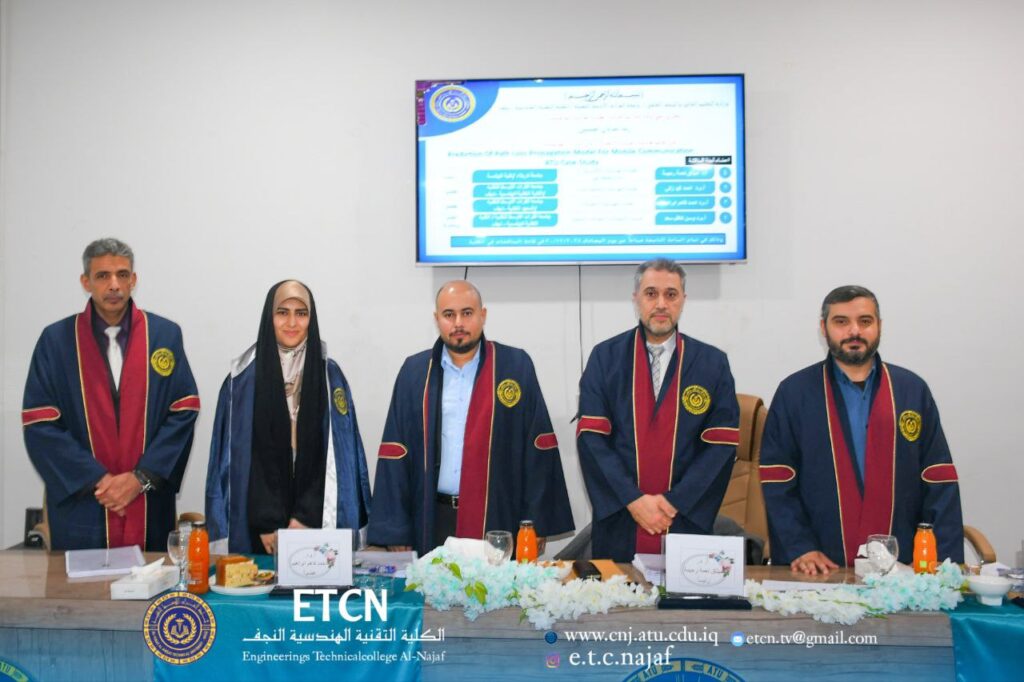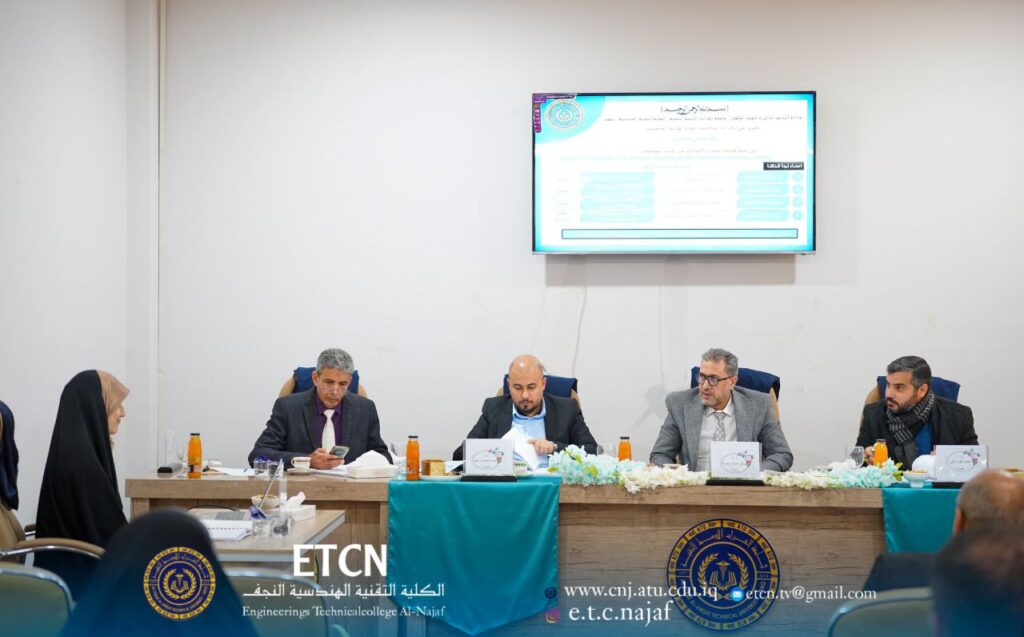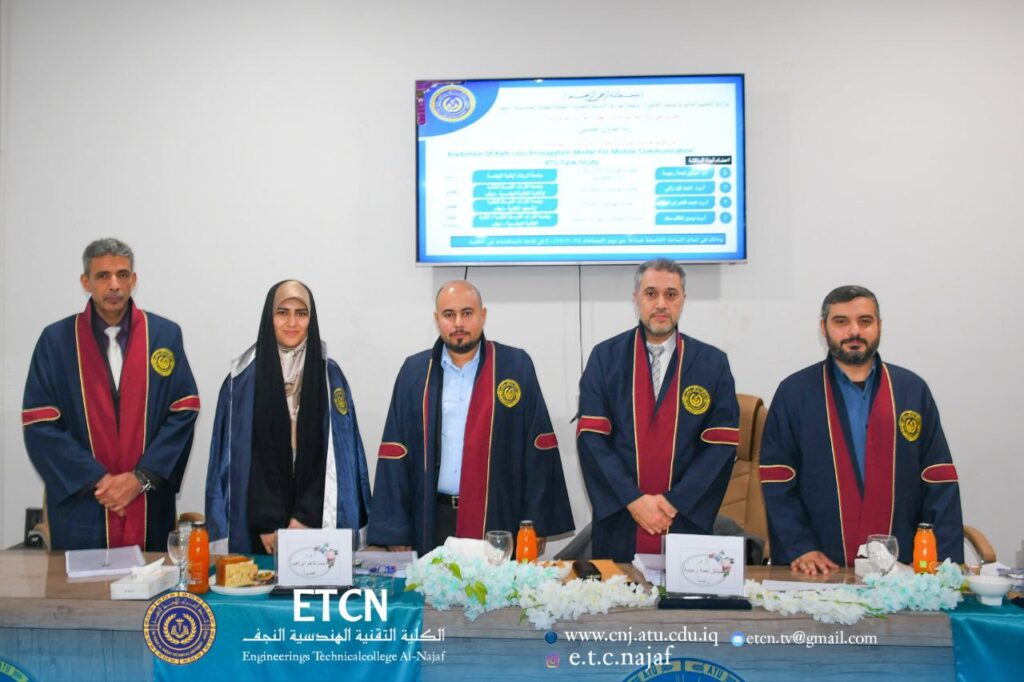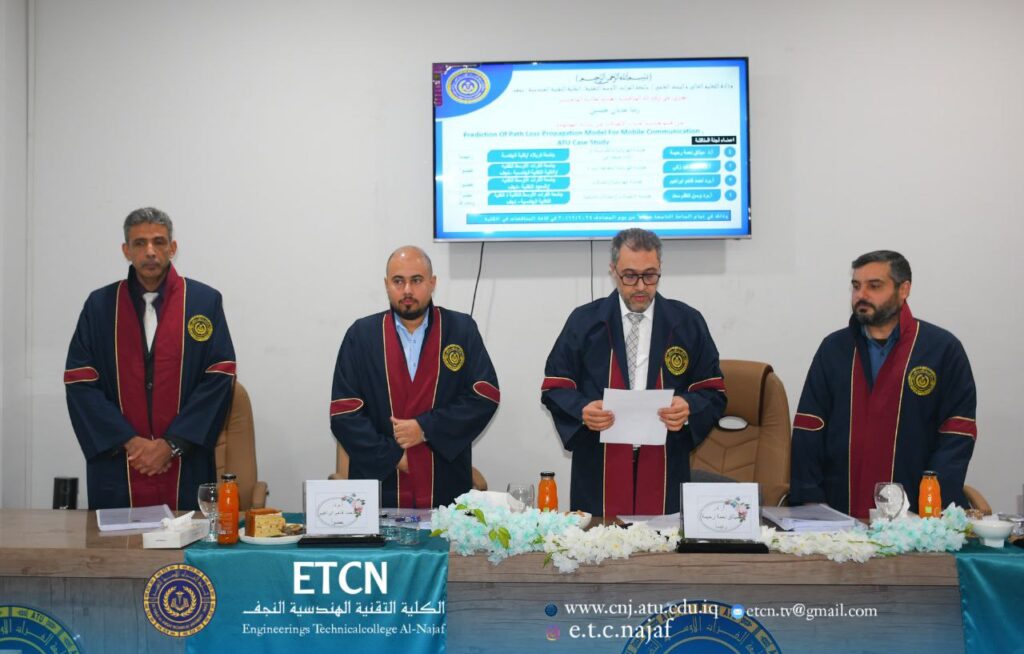
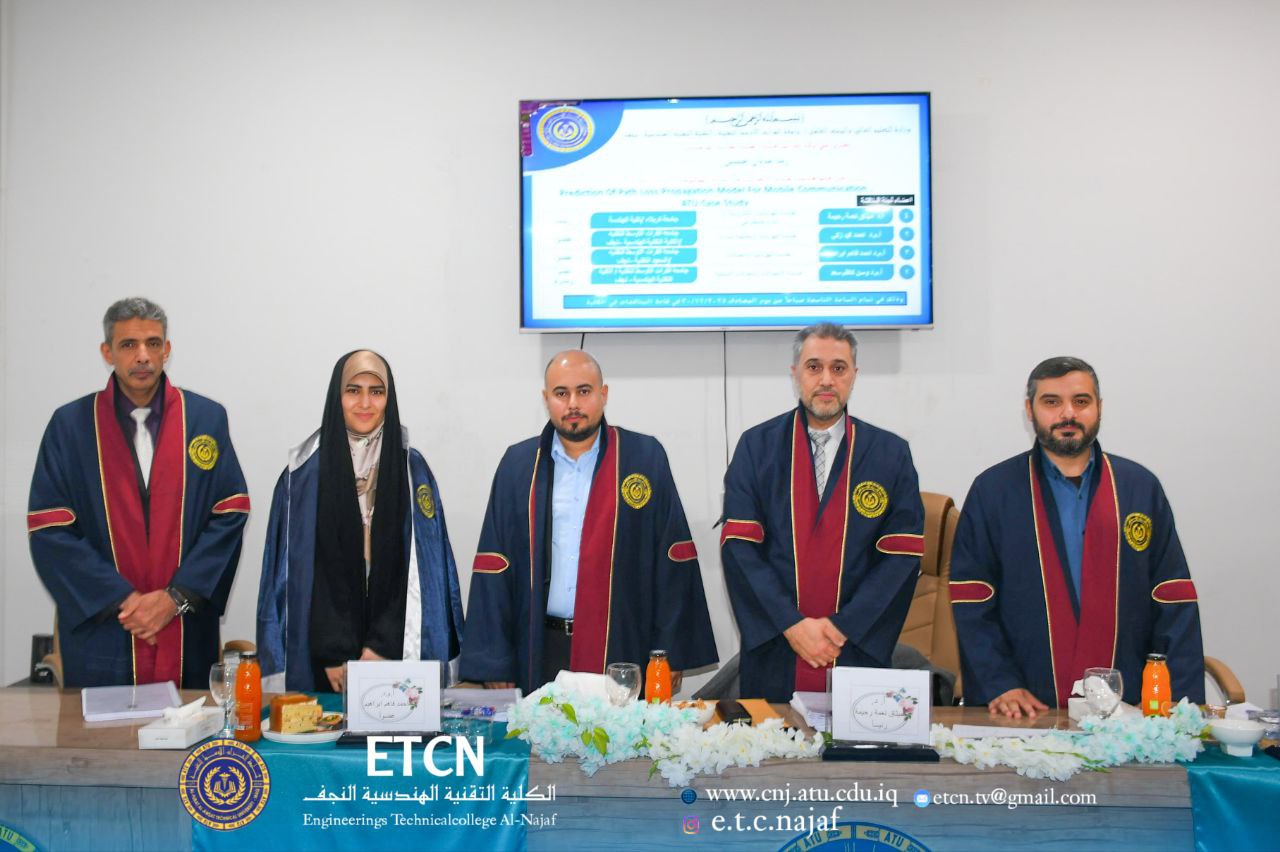
A master’s thesis at the Technical Engineering College in Najaf, Al-Furat Al-Awsat Technical University, titled “Prediction of Path Loss Propagation Model for Mobile Communication: ATU Case Study”, aimed to predict path loss propagation models specifically for mobile communication systems. The research was conducted by Rasha Adnan Hussein from the Department of Communications.
The study sought to address challenges related to signal degradation and network performance by utilizing real-world measurements. Understanding and accurately predicting path loss is essential for enhancing service quality and improving network design, especially in environments with varying conditions and increased user density.
Key Objectives:
- Improve path loss prediction using machine learning techniques to achieve higher accuracy.
- Evaluate and compare models in both indoor and outdoor environments within Al-Furat Al-Awsat Technical University’s campus and the Technical Engineering College in Najaf.
Findings:
- The study identified the OK-HM model as the closest empirical path loss model for the outdoor environment. Although its predictions aligned reasonably well with practical readings, the model required further refinement to closely match real-world data.
- For indoor environments, the ITU-RM 2135 model was found to be the most accurate, though adjustments were made to enhance its compatibility with measured data.
- As an additional goal, machine learning techniques, particularly the Random Forest model, were applied to improve path loss prediction. This approach demonstrated high accuracy when compared to field measurements.
- The performance of all models was evaluated using RMSE (Root Mean Square Error) and MAPE (Mean Absolute Percentage Error) metrics, ensuring thorough validation.
The thesis highlighted the significance of integrating empirical models with machine learning techniques to address the limitations of traditional path loss models, thereby improving the design and performance of communication networks.